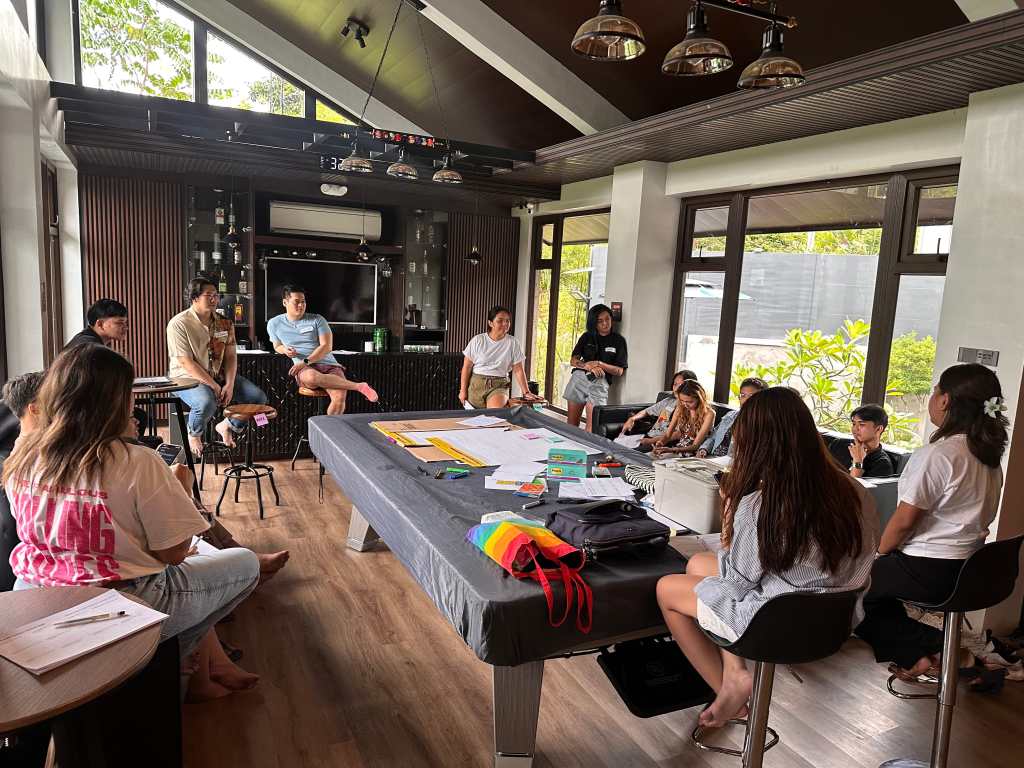
Through my years of working with innovation communities, I’ve noticed that there’s this stigma of “we shouldn’t charge for our events because we’re a non-profit”. Guys, being a non-profit doesn’t mean you can’t earn money for the sustainability of your organization.
Revenue is the total amount of income generated by the sale of goods or services related to a company’s primary operations. Profit is the amount of income that remains after accounting for all expenses, debts, additional income streams, and operating costs.
Source: “Revenue vs. Profit: What’s the Difference?”, Investopedia
Non-profits are allowed to earn money. In fact, they have to generate revenue to sustain operations and fulfill their mission. However, any extra revenue must be reinvested back into the organization instead of being distributed as profit to individuals. This is is the difference between a non-profit and a for-profit organization.
Locally, this is a mindset shift. For the community leaders, it is understanding that the activities they do have [a monetary] value and that they shouldn’t feel shame in asking people to pay a door fee. For the participants, it is understanding that community events are an investment in themselves and in the network that they build around them.
The slippery slope
Accessibility is always the question. If we charge for events, does that mean that there are people who will be excluded from the opportunities we create? Honestly, yes. Depending on the event, you would want to have more committed participants. Adding a door fee impacts your participant pool’s quantity and quality. Depending on the price, the total number of participants will definitely go down. But almost always, commitment and expectations of quality from those who are attending will increase. How you play with these levers is where your skill as a community builder is tested.
In my practice, what tells me that we’ve crossed the line is when we price our activities in a way that isn’t sensible for our target community. Typically, for workshops, we charge a little over the price of a cup of specialty coffee. Right now, that’s about Php 250. The price of this good is often the marker for us to know what is reasonable for our target audience since they are usually coffee or matcha consumers.
This marker may look different depending on the community. For the Bukidnon community, the threshold might be much lower (closer to free considering that their constituents include indigenous people) compared to the Pampanga community, and that’s okay. Experimenting to see what your locality’s threshold is is part of the journey and work of a community leaders.
Influencing the local culture
One of the challenges I personally faced in Bohol is that the locality was used to only attending free government-sponsored or school-sponsored events which then also had free food. It was normal to show up at some meetup and just expecting to eat for free. Skills development wasn’t looked at as an investment and therefore wasn’t taken seriously.
This isn’t to say that people didn’t value skills development. It just wasn’t seen as an investment. The only expressions of skill building events the locality was familiar with were events that were too expensive, bordering as scam events, or events that were completely free and with snacks.
We started with charging just Php 50 to help pay for our own cheap pizza as snacks. The venue was free, the training was also free, and the pizza was shared. There were 15 participants with backgrounds both in tech and non-tech. The topic was about project management. This was in 2018.
Today, we still organize free events, but they often do not come with food. People show up, pay for their own drink, and attend the session. When we have a resource speaker from out of town, we charge Php 250 to help the guest cover some of their travel and accommodation costs. People pay the registration fee, still pay for their own drinks, and attend the session.
This model has worked for us and has given us autonomy on the types of events and activities we are able to host in our locality. It has also sustained us by limiting our costs and has allowed us to focus on what’s important: choosing the right speaker and venue, finding a topic people resonated with, and making sure we’re inviting the right type of participants.
Removing the overhead has made our volunteers’ work simpler, more enjoyable, and sustainable. Participants see value in contributing to our efforts and understand that they get better, happier events in return.
An outcome like this takes time, of course. And a lot of experimentation. We were lucky that we were able to test early. Our prices are fairly stable now with Php 250 for paid workshops or curated networking sessions, and Php 1,000 for larger events like Startup Weekend.
Aiming for a more sustainable grassroots community? Focus on providing value for your community members. Price that value in a way that makes sense for them. With value comes commitment. With commitment comes sustainability.


Leave a Reply