In Filipino culture, you are often pushed forward by others to step into a leadership role. Parents urging you to pursue it for recognition, friends deeming you talkative enough to be their spokesperson, classmates considering you to be confident enough when dealing with the class adviser, or even colleagues nominating you for similar reasons as those in your childhood. In this context then, leadership is culturally considered a burden.
After 10 years of doing community building work in the country, I’ve observed that, like most things, this aspect of our culture is a double-edged sword. It means we are a culture that understands that being a leader is difficult. It is not something everyone wants by default, and it is not something you should take lightly. There is a weight to the title, and therefore there is an intentionality that comes with it.
Consequently, it also then means that when it becomes necessary to choose a leader and someone close by is capable enough or charismatic enough, then it becomes an easy choice. It is passed to them, the burden handed off. Given by many sets of hands to just one — the difficulty expected to be overcome by them, and them alone.
Changes in 2025’s Retreat Format
What I hoped to create with the Community Leaders Retreat was an opportunity for those who were given the burden of leadership; those who grasp it with intentionality, purpose, and tired strength, to come together, slow down, and allow themselves to be the ones to accept care from others like them.
My hope in creating this kind of space is that it will allow leaders to learn how to better accept care from others, and to be more intentional about creating a support circle for themselves when it is time to return to their respective localities.
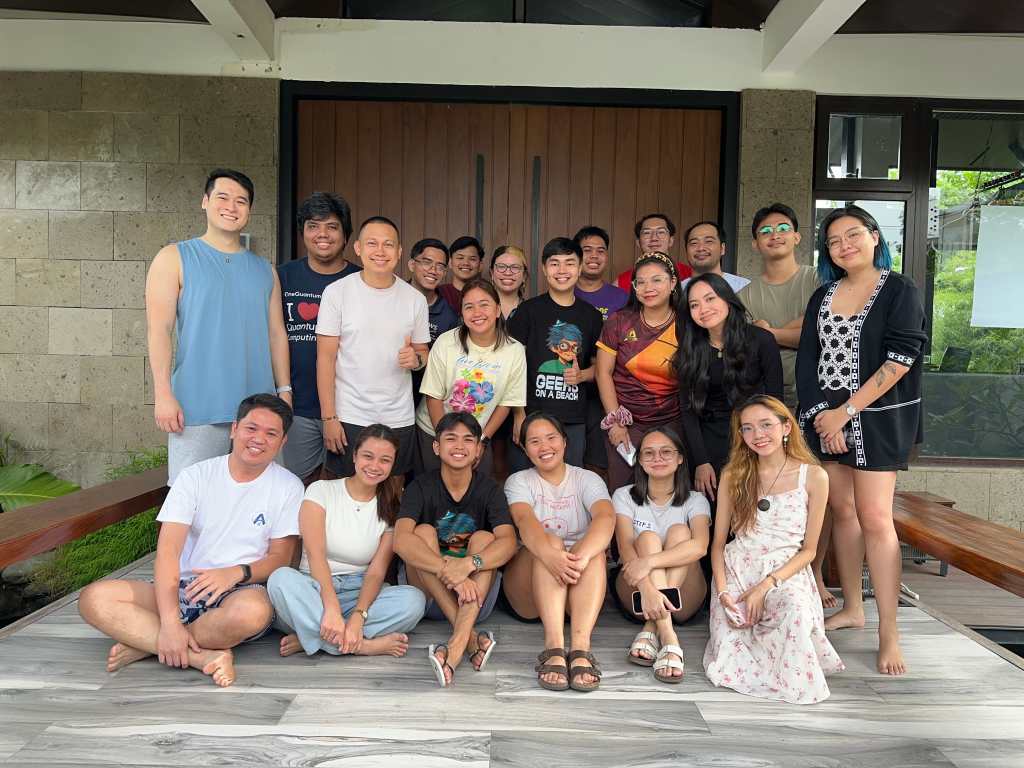
In 2025, I felt we got closer to that goal. Hosted in a beautiful private villa in Davao, 24 tech/design/entrepreneurship community leaders from 6 provinces around the country came together to learn how they could better nurture and serve.
There were a few things that I tried to experiment with during that instance of the retreat. Firstly, it was using the Community Weaving Framework as the key artifact (using sprint terms) to be generated by participants after the retreat. Based on feedback, having something tangible that participants could take home with them and review was an important element.
Next it would be the use of a hand-out. This stack of 30-ish sheets of paper was used in lieu of a slide deck. During the retreat, there was no use of projection screens or LED Wall displays. The participants only had the hand-out, some work sheets, and sticky pads.
Lastly, instead of an open discussion, this instance of the retreat referenced information from sources like Brad Feld and Ian Hathaway’s The Startup Community Way and Chris Heivly’s Build The Fort: The Startup Community Builder’s Field Guide. Relevant anecdotes from these books were referenced in the hand-outs and were used to enhance both learning and conversation.
Topics Discussed and Takeaways
The challenges were identified as a common concern amongst the leaders in the community in the 2024 retreat, and they then became the focus of discussion for the 2025 retreat.
- How do you measure if a community is “successful” or “effective”
- Organizing sustainable events where organizers don’t have to shell out their own cash
- Volunteer Commitment
- Community Succession
In 2025, the program flow mainly relied on lectures, focusing mainly on the resource materials that could address the topics above followed by a discussion at the end of each segment. This method of delivery and learning was chosen mainly because the last retreat had “too much talking, and nobody in the group has solved this problem (yet) and so we have no success benchmark to compare”.
By the end of the retreat, participants were able to:
- Form deeper relationships and connection across regions.
- Understand that topophilia is a strong intrinsic motivator.
- Created a starting point for the way how they structure their grassroots community work.
- Better understood that succession is something that you plan for, but not in the way that you would normally think.
- Recognize that being intentional in unlearning biases and in deeply listening to others is difficult but it is the key to making better decisions for the good of the community.
Areas for Improvement
The biggest weakness that I saw for this format of the retreat was that it was too structured and had too little breaks. In my effort to act on the feedback from the 2024 retreat, I failed to see that centering the entire program on the resource-based discussion was the opposite end of the spectrum when it comes to content delivery.
There weren’t many chances for participants to organically exchange ideas and experiences, and we lost out on tapping the knowledge of the many despite having a Lightning Talks session prepared.
Logistics-wise, there were only a few issues (an aircon-related misunderstanding and a now-funny bee sting incident) thanks to the amazing local team and so I am grateful to have more focus on the program and its content.
The 2026 instance is happening this May in Pampanga and I hope to find a good middle-ground between having discussions centered around a reputable source and tapping into the group’s knowledge through freeform discussion.
All in all, my motivation for developing a replicable format has now become clearer over years. I would like for community leads to be able to host their own instances of this retreat; whether it is just for their own community members, or if it is open to others in the country. What is important for me is to allow other leaders (now and in the future) to see that nurturing communities need not be difficult! And that we can rely on each other to ease the burden of leadership by being intentional about creating spaces and opportunities to allow ourselves to be cared for and grow.


Leave a comment